The Benefits of Using Insulated Concrete Forms
The Benefits of Using Insulated Concrete Forms (ICFs) in New Home Construction
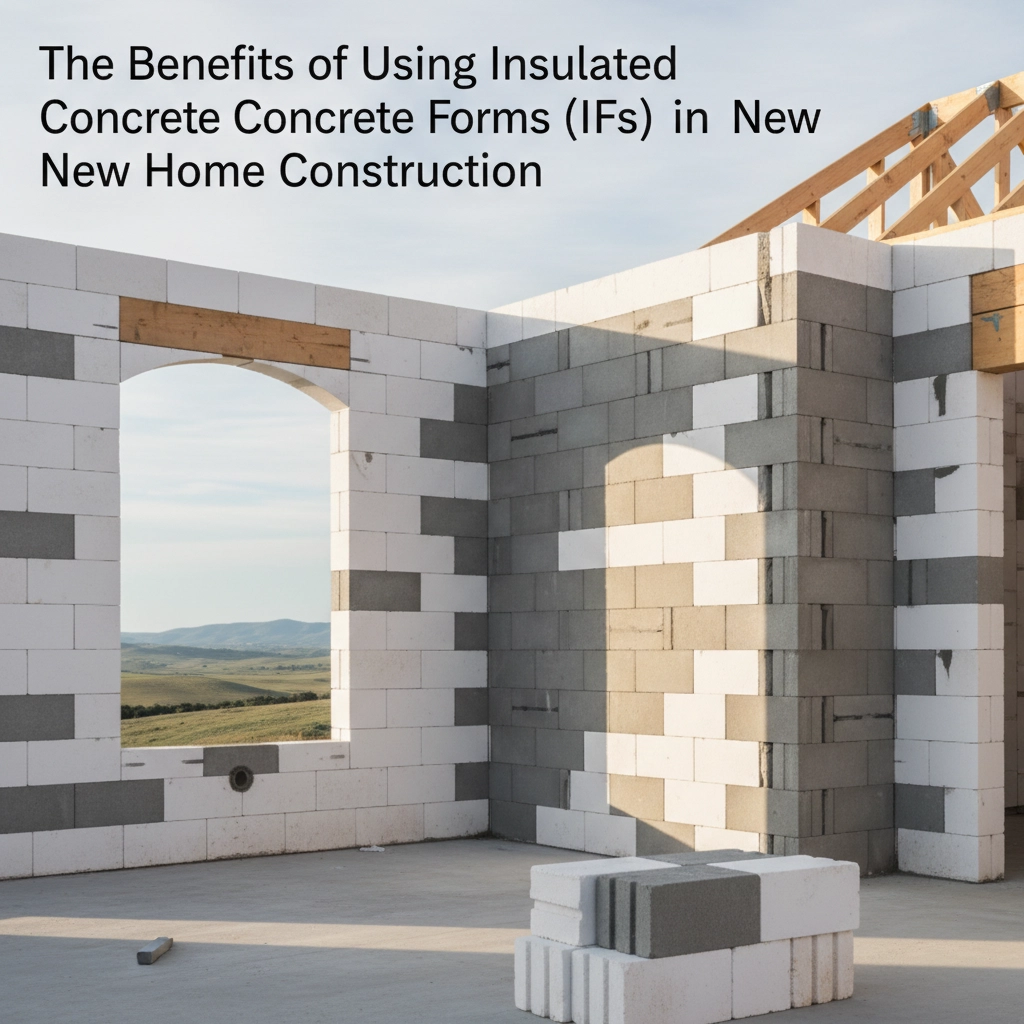
If you're planning to build a new home in the Sacramento area, you've probably heard about rising energy costs and the push for more efficient construction methods. With California's strict energy codes and our region's hot summers and mild winters, choosing the right building method can make a huge difference in your comfort and utility bills for decades to come.
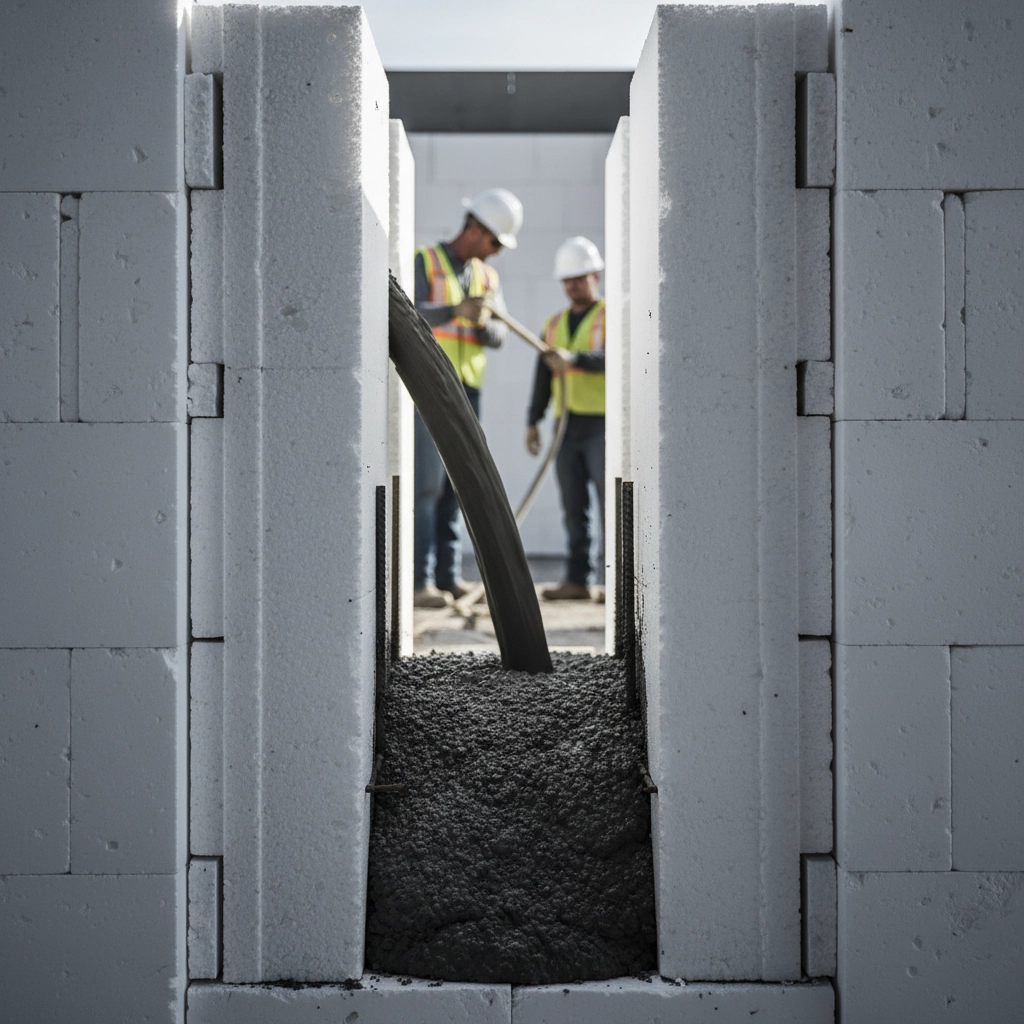
Insulated Concrete Forms, or ICFs, represent one of the most effective building technologies available today. This construction method uses interlocking foam blocks that are stacked like giant Legos, then filled with reinforced concrete to create incredibly strong, well-insulated walls that stay in place permanently.
Dramatic Energy Savings That Matter in Northern California
The most compelling reason to consider ICF construction is the energy performance. In our Sacramento Valley climate, where summer temperatures regularly hit the 90s and 100s, keeping your home cool can be expensive with traditional construction methods.
ICF homes can achieve up to 60% lower energy costs compared to stick-built homes. This isn't just marketing hype: it's the result of how ICF walls work. The concrete core acts like a thermal battery, storing cool air during the night and releasing it slowly during hot days. Meanwhile, the continuous foam insulation on both sides of the wall eliminates the thermal bridging that happens with wood studs, where heat travels right through the framing.
For a typical 2,500 square foot home in Placer County, this can translate to annual savings of $1,500 to $2,500 on utility bills. Over the life of your mortgage, you're looking at tens of thousands in energy savings. Plus, with PG&E rates continuing to climb, these savings become even more valuable over time.
The thermal mass effect is particularly beneficial in our region's climate. During those hot Central Valley afternoons, your ICF walls are slowly absorbing heat rather than allowing it to penetrate into your living spaces. At night, when temperatures drop, the walls release that stored energy to the outside while keeping your interior comfortable.
Built to Last Through California's Challenges
Living in Northern California means dealing with seismic activity, and ICF construction excels in earthquake resistance. The reinforced concrete core, combined with steel rebar, creates a monolithic structure that moves as one unit during seismic events. This is a significant advantage over wood-frame construction, where joints and connections can fail.
ICF walls are also incredibly strong against other forces. While we don't deal with hurricanes here, we do face occasional high winds, especially in the foothills of El Dorado and Placer counties. The structural integrity of ICF construction means your home can withstand forces that would damage traditional construction.
The fire resistance is another major benefit, especially given California's wildfire concerns. ICF walls have a four-hour fire rating, meaning they can withstand direct flame contact for four hours without structural failure. For homes in the wildland-urban interface areas common throughout our region, this added protection provides invaluable peace of mind.
Comfort That You Can Feel Every Day
Superior Sound Control
If you've ever lived near a busy road or in a neighborhood with aircraft traffic, you'll appreciate the acoustic benefits of ICF construction. The dense concrete core combined with foam insulation layers allows only about one-eighth the sound penetration of wood-frame walls.
This is particularly valuable in our region, where many neighborhoods are near major highways like I-80, Highway 50, or busy surface streets. Whether it's traffic noise, neighbor activity, or even outdoor equipment, ICF walls create a noticeably quieter living environment.

Consistent Temperatures Throughout Your Home
One of the most common complaints about traditionally built homes is temperature variation: rooms that are too hot in summer or cold in winter, despite the HVAC system running constantly. ICF construction eliminates this problem through continuous insulation that doesn't have gaps or thermal bridges.
The result is remarkably even temperatures throughout your home. Your HVAC system runs less frequently but maintains better comfort, and you won't have those rooms that are always too warm or too cool.
Construction Advantages That Benefit Everyone
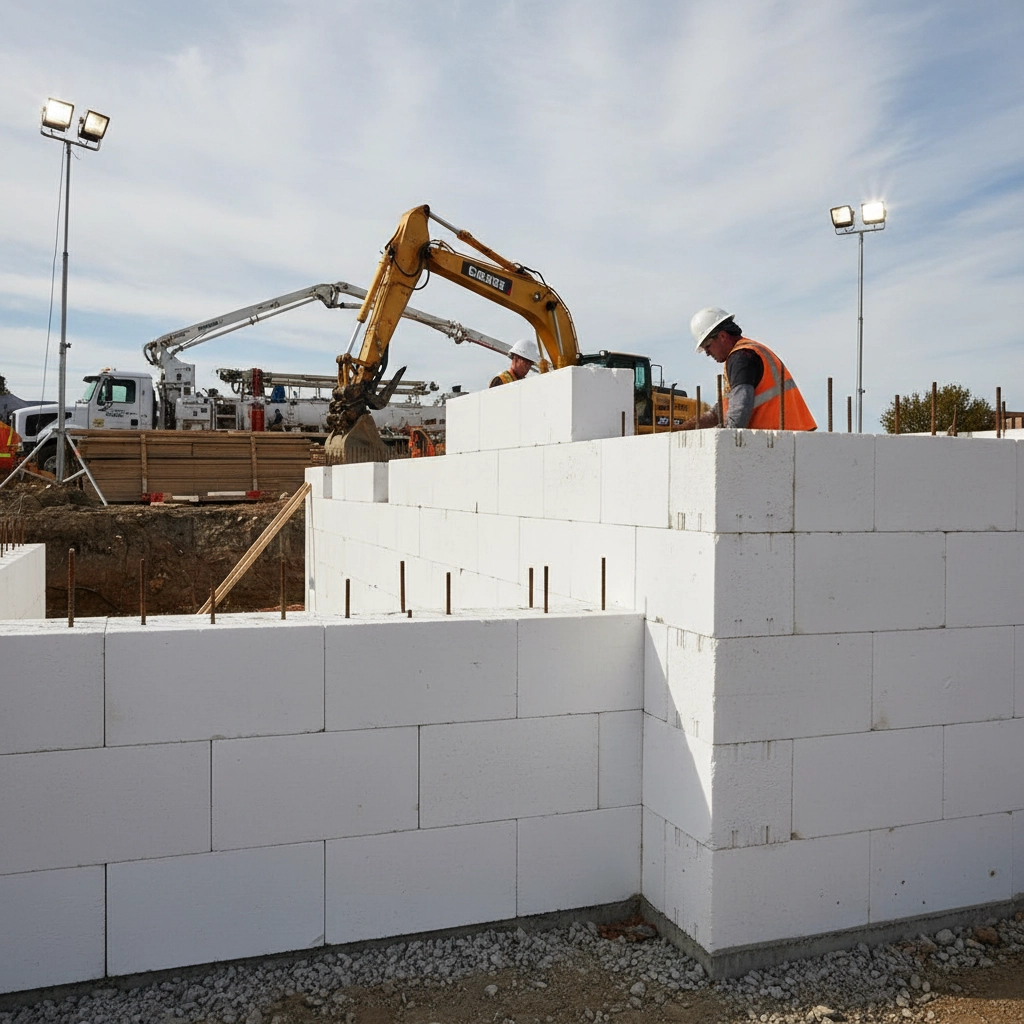
ICF construction can actually speed up your building timeline by 2-4 months compared to traditional stick-built methods. The foam blocks stack together easily: think of it like adult-sized Legos: and once the concrete is poured and cured, you have both structure and insulation complete in one step.
This efficiency can be particularly valuable in our market, where construction labor is expensive and sometimes hard to schedule. The straightforward stacking process means less specialized framing labor is required, and the forms stay in place permanently, eliminating the time needed to strip away temporary formwork.
Design Flexibility
Despite the concrete core, ICF construction doesn't limit your architectural options. The forms can be curved, angled, or configured for complex designs. Whether you're planning a modern minimalist home or a traditional California ranch style, ICF can accommodate your vision.
The system works well for basement construction too, which can be valuable in areas where you want additional storage or living space below grade. The superior moisture resistance of ICF makes it ideal for below-grade applications.
Long-Term Value That Protects Your Investment
ICF homes require significantly less maintenance than wood-frame construction. You won't deal with issues like rot, termites, or mold that can affect traditional building materials. In our area, where termites and moisture issues can be costly problems, this durability translates directly into lower long-term ownership costs.
The walls are also highly resistant to moisture infiltration, which is important in areas that might experience occasional flooding or where irrigation systems are used extensively. The continuous barrier prevents water intrusion that could lead to expensive remediation later.
Insurance and Resale Considerations
Many insurance companies offer discounts for ICF construction due to the superior fire and storm resistance. While specific discounts vary, the structural integrity and fire resistance of ICF homes often qualify for reduced premiums.
From a resale perspective, energy efficiency is increasingly important to buyers. With California's focus on environmental responsibility and rising energy costs, an ICF home with documented low energy usage can be a significant selling point.
Local Considerations for Our Region
Building codes in Sacramento, Placer, and El Dorado counties are increasingly focused on energy efficiency and seismic safety. ICF construction easily meets or exceeds these requirements, often simplifying the permitting process.
The thermal performance of ICF is particularly well-suited to our climate zone. We experience hot, dry summers and mild winters: exactly the conditions where thermal mass and continuous insulation provide the greatest benefit. Unlike regions with extreme cold where heating costs dominate, our cooling-focused climate showcases ICF's strengths.
Water conservation is another local consideration. ICF homes often require smaller HVAC systems due to their efficiency, which can reduce water usage for evaporative cooling systems or reduce the load on heat pumps.
Making the Decision
ICF construction typically costs 10-15% more upfront than traditional wood-frame construction. However, the energy savings, reduced maintenance costs, and potential insurance discounts often offset this premium within 5-7 years. For homeowners planning to stay in their home long-term, the economics are compelling.
Choose ICF construction if you prioritize long-term value, energy efficiency, and superior comfort. It's particularly well-suited for homeowners who want a quiet, consistent indoor environment and appreciate the peace of mind that comes with exceptional durability.
Consider traditional construction if upfront cost is your primary concern and you don't plan to stay in the home for more than a few years. However, even for shorter-term ownership, the energy savings and potential resale advantages may justify the additional investment.
Building a new home is one of the biggest investments you'll make. Rimant Construction has experience with both traditional and ICF construction methods throughout the Sacramento region. We can help you evaluate which approach makes the most sense for your specific situation, site conditions, and long-term goals.
Interested in consulting on your project? Rimant Construction’s team can help weigh your options and create a tailored plan. Reach out anytime for a conversation about your goals.
916-690-4324
info@rimantconstruction.com
rimantconstruction.com
Disclaimer, these are opinions, and as always you should consult your local planning authority and a licensed general contractor before you start construction work.


Comments
Post a Comment