ADU Vs Home Addition 2026
ADU Vs Home Addition: Which Is Better For Your Sacramento Property in 2026?
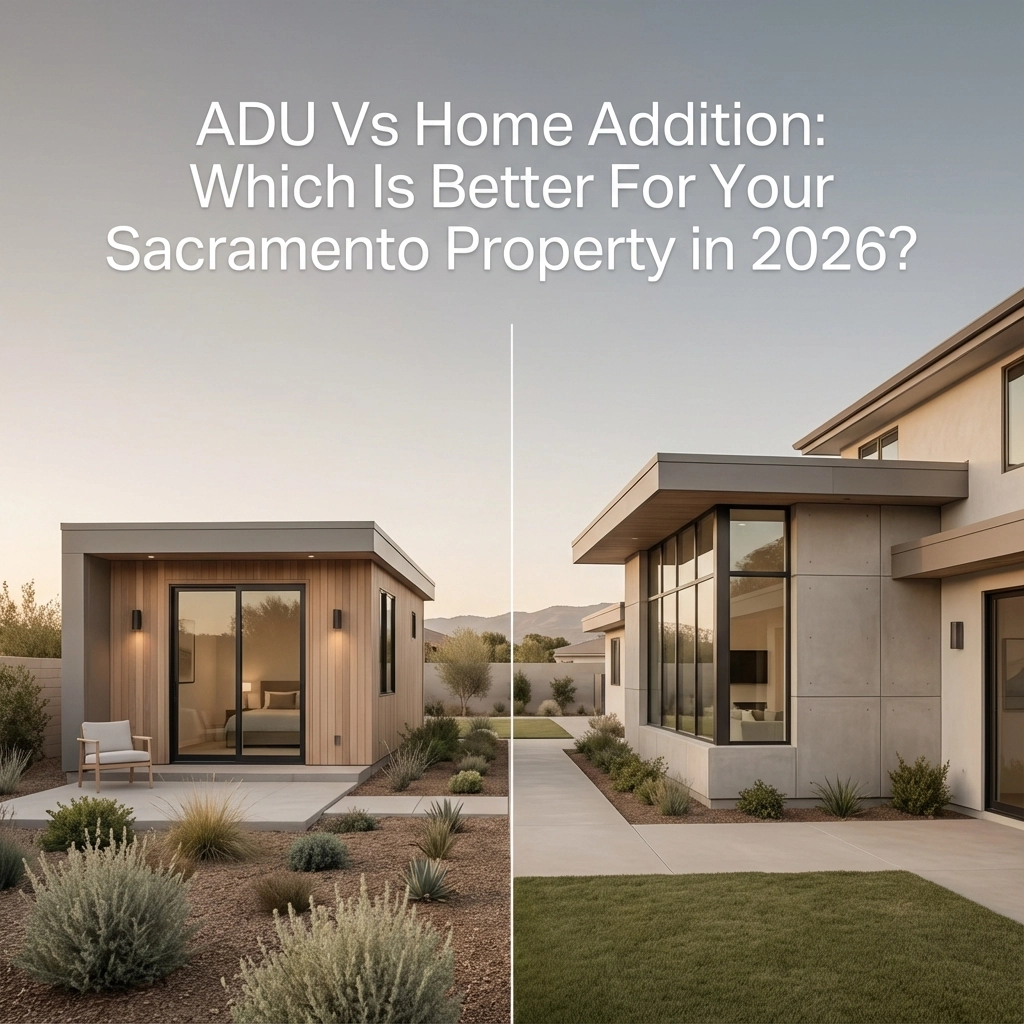
Sacramento homeowners looking to expand their living space in 2026 face a critical decision: build an Accessory Dwelling Unit (ADU) or add onto their existing home. Both options can increase property value and provide additional space, but they serve different purposes and come with distinct advantages and challenges.
The choice between an ADU and a home addition depends on your specific goals, budget, property constraints, and long-term plans. ADUs offer rental income potential and recent regulatory advantages, while home additions directly expand your primary living space. Understanding the nuances of each option will help you make the right decision for your Sacramento property.
Understanding ADUs in Sacramento's Current Landscape
An Accessory Dwelling Unit is a separate residential dwelling located on the same lot as a primary residence. In Sacramento, ADUs have become increasingly popular due to streamlined regulations and financial incentives that make them more attractive than ever before.
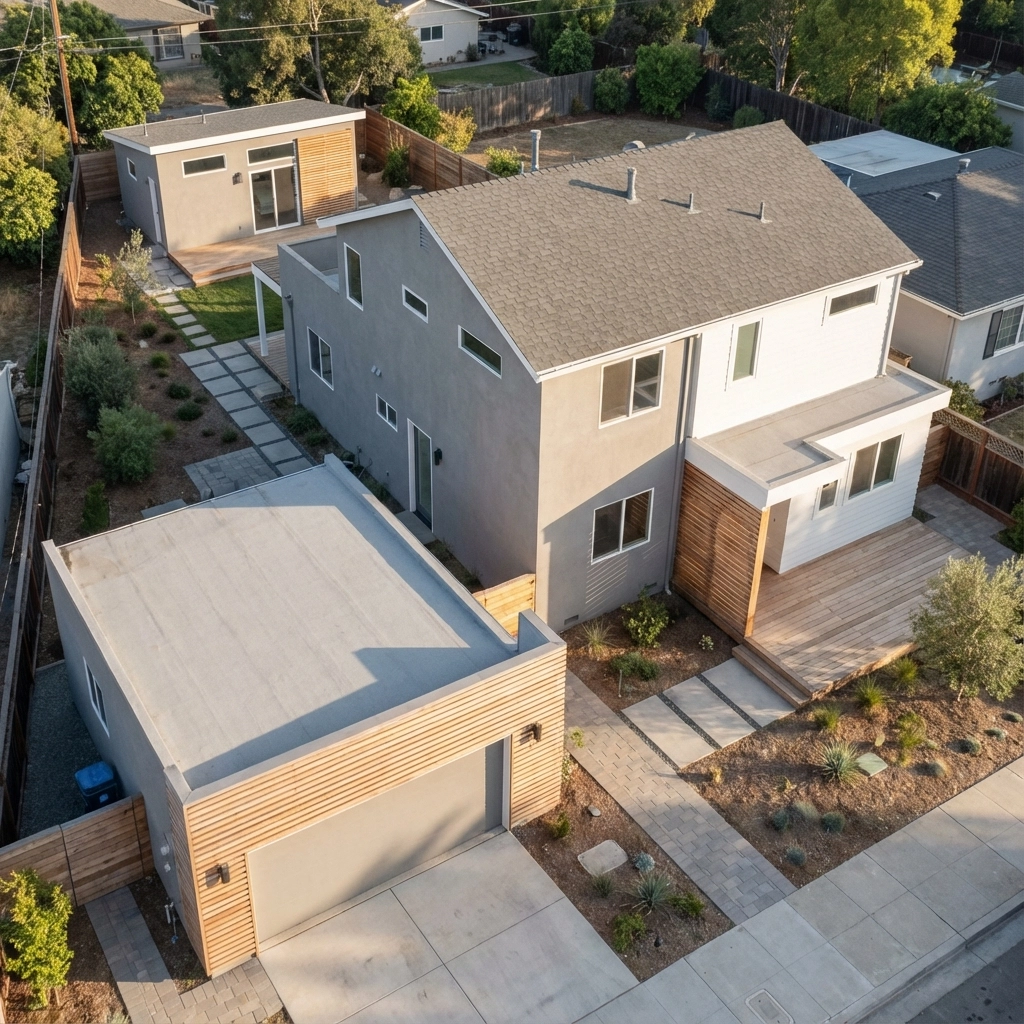
Sacramento currently allows up to two ADUs per residential lot, offering several configuration options:
- Detached ADUs: Standalone structures separate from the main house
- Attached ADUs: Connected to the primary residence but with separate entrances
- Garage conversions: Transform existing garage space into living units
- Basement or attic conversions: Convert underutilized areas into complete dwelling units
- Junior ADUs (JADUs): Smaller units (500 sq ft or less) within the primary residence
Size Limitations and Regulations
Sacramento has specific size restrictions that vary by ADU type:
- One-bedroom attached ADUs: Maximum of 50% of primary residence square footage or 850 square feet (whichever is greater)
- Multi-bedroom attached ADUs: Up to 50% of primary residence or 1,000 square feet (whichever is greater)
- Detached ADUs: Maximum 1,200 square feet
- JADUs: Limited to 500 square feet
Recent Legislative Changes
Assembly Bill 1033 has revolutionized Sacramento's ADU landscape by allowing separate sale of ADUs, similar to condominiums. This means property owners aren't locked into being landlords and can generate returns through direct sale rather than rental income alone.
Home Additions: Traditional Expansion Approach
Home additions involve expanding your existing residence by adding square footage directly to the current structure. This approach integrates new space seamlessly with your home and typically serves to increase living area for the primary household.
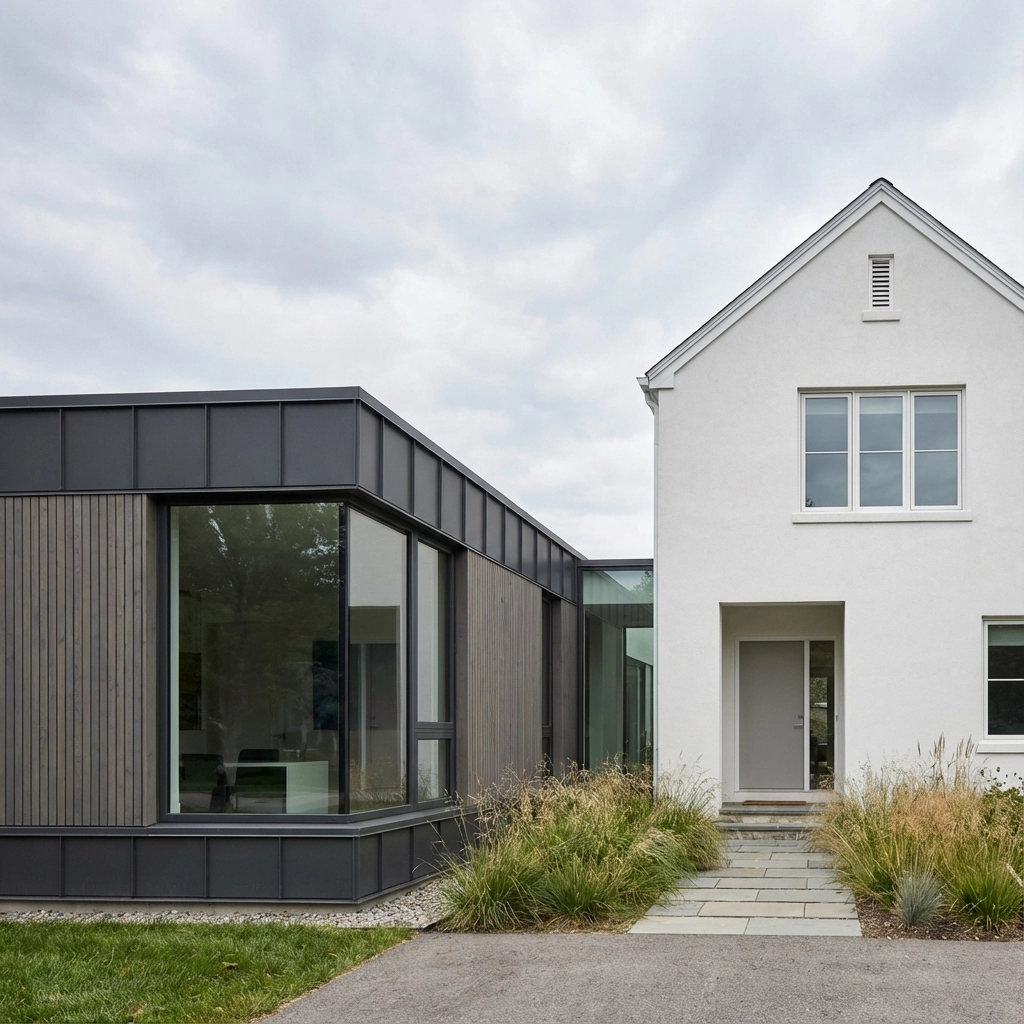
Common types of home additions include:
- Room additions: Adding bedrooms, bathrooms, or living spaces
- Second-story additions: Building upward when lot space is limited
- Bump-outs: Small extensions to existing rooms
- Whole-house additions: Substantial expansions affecting multiple areas
Home additions require integration with existing utilities, HVAC systems, and structural elements, making them more complex from an engineering perspective but potentially more cohesive from a design standpoint.
Cost Analysis: ADU vs Home Addition
ADU Construction Costs
Sacramento ADU costs in 2026 typically range from $130,000 to $430,000, depending on several factors:
- Garage conversions: $130,000 - $200,000
- Attached ADUs: $180,000 - $300,000
- Detached new construction: $250,000 - $430,000
- JADUs: $80,000 - $150,000
JADUs offer particular cost advantages, as they're exempt from impact fees and many utility connection charges, making them the most budget-friendly option for smaller space additions.
Home Addition Costs
Home addition costs vary significantly based on scope, materials, and complexity:
- Basic room additions: $150 - $300 per square foot
- High-end additions: $300 - $500+ per square foot
- Second-story additions: $200 - $400 per square foot
- Bathroom additions: $25,000 - $60,000
- Kitchen additions: $40,000 - $100,000+
Regulatory and Permitting Considerations
ADU Permitting Advantages
Sacramento has streamlined ADU permitting processes significantly:
- Complete applications move through plan review in 4-8 weeks
- Pre-approved plans receive approval in as little as 30 days
- Reduced impact fees for most ADU types
- Simplified utility connection processes
Home Addition Permitting
Traditional home additions typically face:
- Longer permitting timelines (8-16 weeks average)
- Standard impact fees and connection charges
- More complex structural and code compliance requirements
- Potential setback and lot coverage restrictions
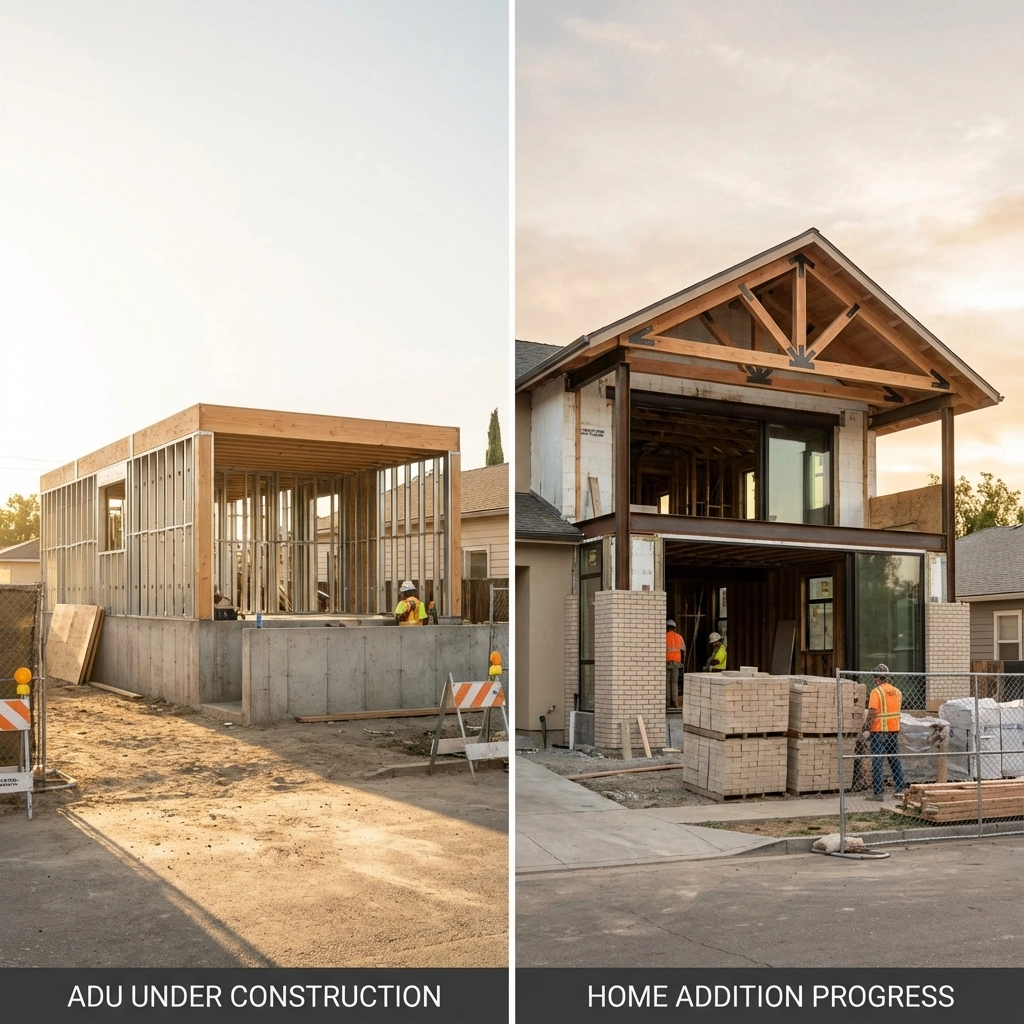
Pros and Cons Comparison
ADU Advantages
Pros:
- Generate rental income ($1,500 - $3,000+ monthly in Sacramento)
- Can be sold separately under AB 1033
- Faster permitting and reduced fees
- Addresses multigenerational housing needs with privacy
- Smaller environmental footprint
- Increases property value while creating separate asset
Cons:
- Requires landlord responsibilities (if renting)
- Size limitations may not meet all space needs
- Separate utility connections and maintenance systems
- Potential neighbor relations concerns
- Limited to specific lot configurations
Home Addition Advantages
Pros:
- Directly expands primary living space
- Seamless integration with existing home
- No landlord responsibilities or tenant management
- Can share utilities and systems with main house
- Unlimited design integration possibilities
- Straightforward single-property ownership
Cons:
- No rental income generation potential
- Cannot be sold separately
- Typically longer permitting processes
- Standard impact fees apply
- May require significant structural modifications
- Limited future flexibility
Decision Framework: Which Option Fits Your Situation?
Choose an ADU if you:
- Want to generate ongoing rental income
- Are interested in separate sale flexibility under AB 1033
- Have aging parents or adult children who need independent living space
- Want to maximize property value through multiple dwelling units
- Prefer faster permitting and potential fee savings
- Have adequate lot space for separate structure or suitable conversion space
- Are comfortable managing rental properties or hiring property management
Choose a Home Addition if you:
- Primarily need space for your own household
- Prefer not to deal with tenants or rental management
- Want seamless integration with existing home design and systems
- Have specific spatial needs that exceed ADU size limitations
- Prefer traditional single-family property ownership
- Want to avoid separate utility connections and maintenance systems
- Have architectural vision that requires integration with main house
Making the Final Decision
The choice between an ADU and home addition ultimately depends on your financial goals, lifestyle preferences, and property characteristics. ADUs offer greater financial flexibility and faster implementation, particularly given Sacramento's 2026 regulatory environment. Home additions provide direct household expansion without the complexities of rental property management.
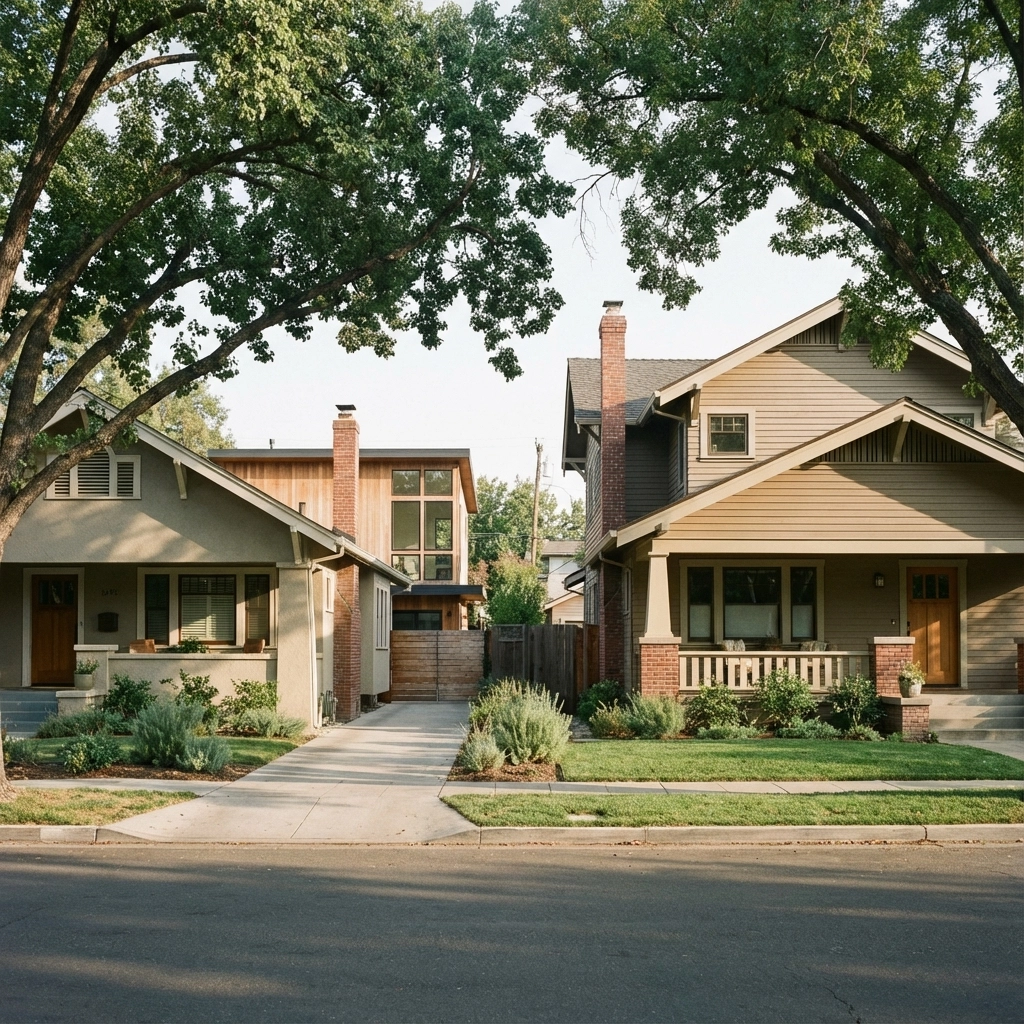
Consider your long-term plans carefully. If you value income generation, future sale flexibility, or multigenerational living arrangements, an ADU likely offers better returns on investment. If your primary goal is expanding your personal living space with seamless integration, a home addition may better serve your needs.
Both options increase property value, but ADUs provide multiple paths to financial return while home additions focus on single-property enhancement. Sacramento's current ADU incentives make 2026 particularly advantageous for accessory dwelling unit construction.
For personalized guidance on your specific property and goals, consulting with experienced Sacramento contractors can help you evaluate site conditions, regulatory requirements, and design possibilities for either option. The right choice depends on balancing your immediate needs with long-term property and financial objectives.
Interested in consulting on your project? Rimant Construction’s team can help weigh your options and create a tailored plan. Reach out anytime for a conversation about your goals.
916-690-4324
info@rimantconstruction.com
rimantconstruction.com
Disclaimer, these are opinions, and as always you should consult your local planning authority and a licensed general contractor before you start construction work.


Comments
Post a Comment