7 Mistakes You're Making with Outdoor Kitchen Planning
7 Mistakes You're Making with Outdoor Kitchen Planning (And How to Fix Them)
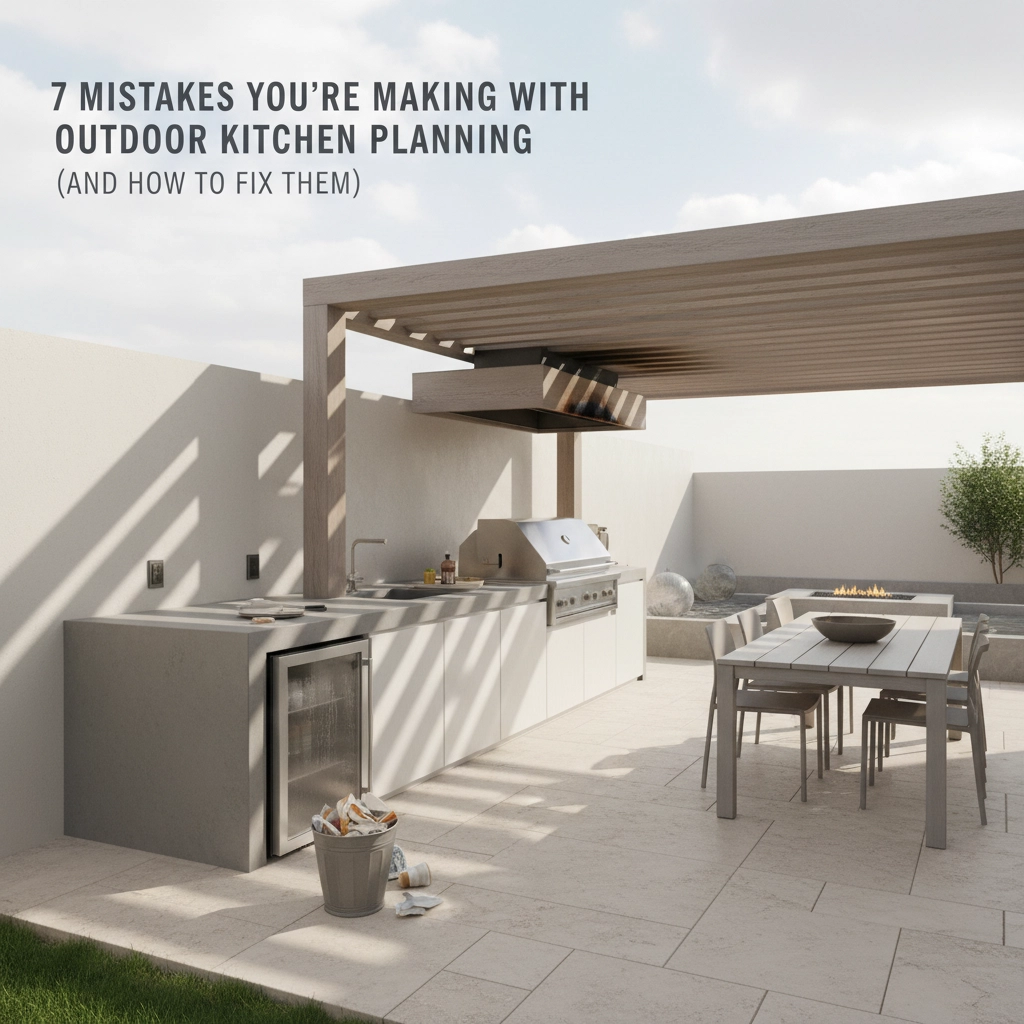
Outdoor kitchens have become the crown jewel of backyard entertainment, transforming ordinary patios into culinary command centers. However, the excitement of creating your dream outdoor cooking space can quickly turn into frustration when common planning mistakes derail your project. Whether you're considering your first outdoor kitchen or looking to upgrade an existing setup, understanding these critical errors: and their solutions: will save you thousands of dollars and countless headaches.
Mistake #1: Ignoring the Kitchen Work Triangle
The kitchen work triangle principle applies just as much outdoors as it does inside your home. This fundamental concept places your three primary work zones: cooking (grill), cleaning (sink), and storage (refrigerator): in an efficient triangular layout. Many homeowners scatter these elements randomly across their outdoor space, creating a frustrating cooking experience where every task requires unnecessary steps.
The Fix: Plan your layout so these three zones form a logical triangle with each side measuring between 4 and 9 feet. Position your grill, sink, and refrigerator within easy reach of each other, ensuring smooth workflow during meal preparation. Consider the sequence of your cooking process: you'll move from the refrigerator to the prep area, then to the grill, and finally to the sink for cleanup.
Mistake #2: Choosing the Wrong Location
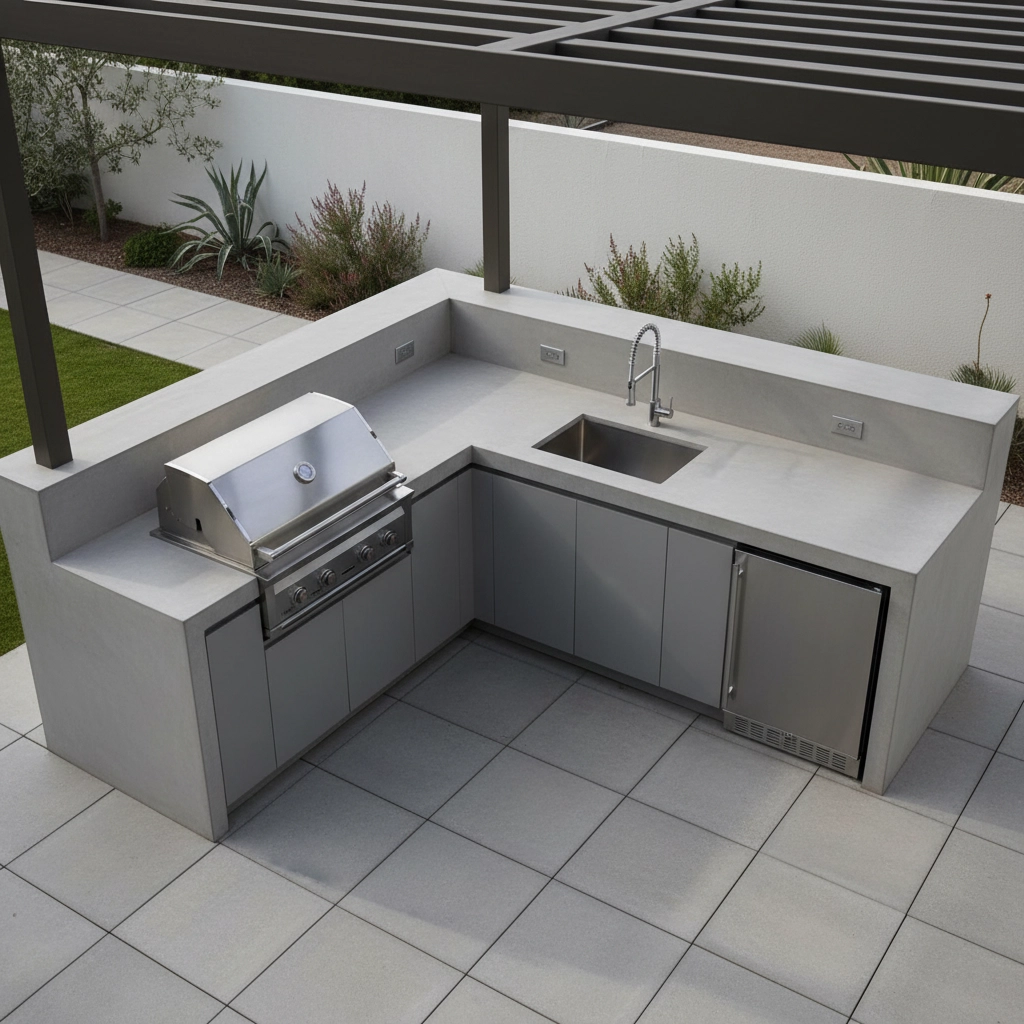
Location determines whether your outdoor kitchen becomes a beloved gathering spot or an underused inconvenience. Common placement errors include positioning the kitchen too far from your indoor kitchen (making food transport cumbersome), too close to your house (allowing smoke to drift indoors), or in areas with poor wind patterns that trap smoke around seating areas.
The Fix: Select a location that balances convenience with comfort. Position your outdoor kitchen within reasonable distance of your indoor kitchen: ideally 20-30 feet: to maintain easy access to your pantry and indoor prep space. Study your property's wind patterns throughout different seasons to ensure smoke disperses away from dining areas and neighboring properties. Consider sun exposure as well; while some sunshine is pleasant, all-day direct sun can make cooking uncomfortable during summer months.
Mistake #3: Underestimating Counter Space Needs
Insufficient counter space ranks among the most regrettable oversights in outdoor kitchen design. Outdoor cooking typically requires more prep space than indoor cooking since you're often preparing larger quantities for entertaining. Without adequate workspace, you'll find yourself constantly running back to your indoor kitchen or struggling with cramped conditions that make cooking stressful rather than enjoyable.
The Fix: Plan for generous counter space on both sides of your grill: at least 2-3 feet on each side for food placement and prep work. Include dedicated areas for different tasks: a prep zone near the sink for washing and chopping, a landing zone beside the grill for hot items, and a serving area for plating finished dishes. Consider incorporating a kitchen island or peninsula to maximize workspace while maintaining good traffic flow.
Mistake #4: Selecting Indoor-Grade Materials
Using materials designed for indoor use represents a costly mistake that leads to rapid deterioration and potential safety hazards. Standard wood cabinetry, non-weatherproof countertops, and residential-grade appliances cannot withstand constant exposure to rain, UV rays, temperature fluctuations, and humidity. This mistake becomes particularly expensive when materials fail prematurely and require complete replacement.
The Fix: Invest in marine-grade or outdoor-rated materials from the beginning. Choose stainless steel appliances specifically designed for outdoor use: these typically last 10-15 years compared to 3-5 years for indoor appliances used outdoors. Select natural stone, concrete, or high-quality synthetic countertops that resist weather damage. For cabinetry, opt for stainless steel, teak, or polymer materials designed to withstand outdoor conditions. While the initial investment is higher, these materials will save money over time by avoiding premature replacement.
Mistake #5: Inadequate Storage Planning
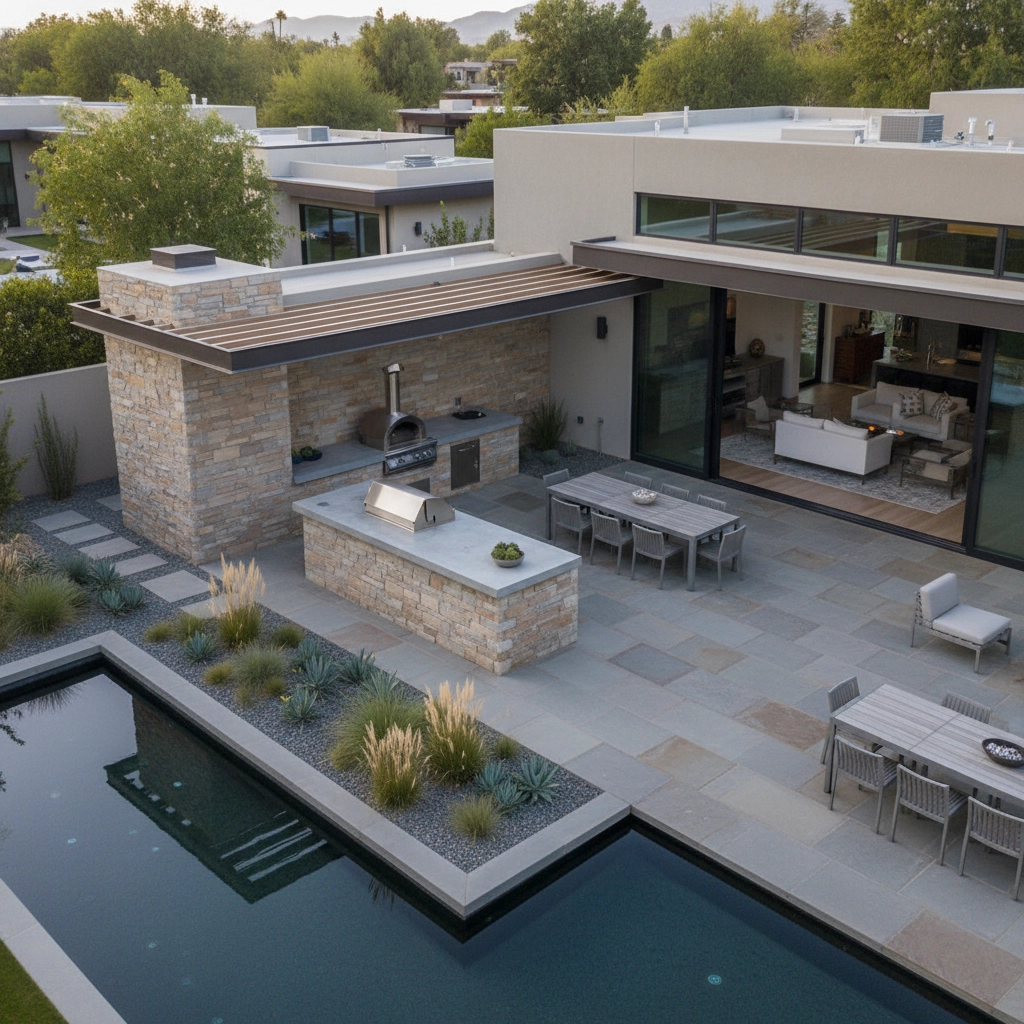
Poor storage planning forces you to make constant trips to your indoor kitchen for basic supplies, defeating the purpose of having a fully functional outdoor cooking space. Many homeowners focus solely on the visual appeal of their outdoor kitchen while neglecting practical storage needs for utensils, cookware, cleaning supplies, and non-refrigerated ingredients.
The Fix: Incorporate substantial weatherproof storage throughout your design. Install cabinets and drawers specifically designed for outdoor use to store grilling tools, cookware, serving dishes, and cleaning supplies. Consider a dedicated spice and condiment storage area with easy access from the cooking zone. Include closed storage to protect items from weather and pests, as well as open shelving for frequently used items. Plan storage zones that correspond to your work triangle: cleaning supplies near the sink, cooking tools near the grill, and serving items near the prep area.
Mistake #6: Overlooking Electrical and Lighting Requirements
Electrical planning often gets treated as an afterthought, leading to expensive retrofitting projects. Many outdoor kitchens end up with insufficient outlets for appliances, inadequate lighting for evening cooking, and poor placement of electrical elements that require costly relocation. Safety considerations also come into play: outdoor electrical work requires GFCI protection and weather-resistant components.
The Fix: Plan your electrical needs during the initial design phase. Install abundant GFCI-protected outlets in convenient locations for appliances like blenders, food processors, and outdoor refrigeration units. Include task lighting over cooking and prep areas, ambient lighting for dining zones, and accent lighting to create atmosphere. Consider including USB charging stations for modern convenience. Work with a licensed electrician to ensure all installations meet local codes and safety requirements. Plan for future needs as well: it's easier to install extra circuits initially than to add them later.
Mistake #7: Ignoring Weather Protection and Ventilation
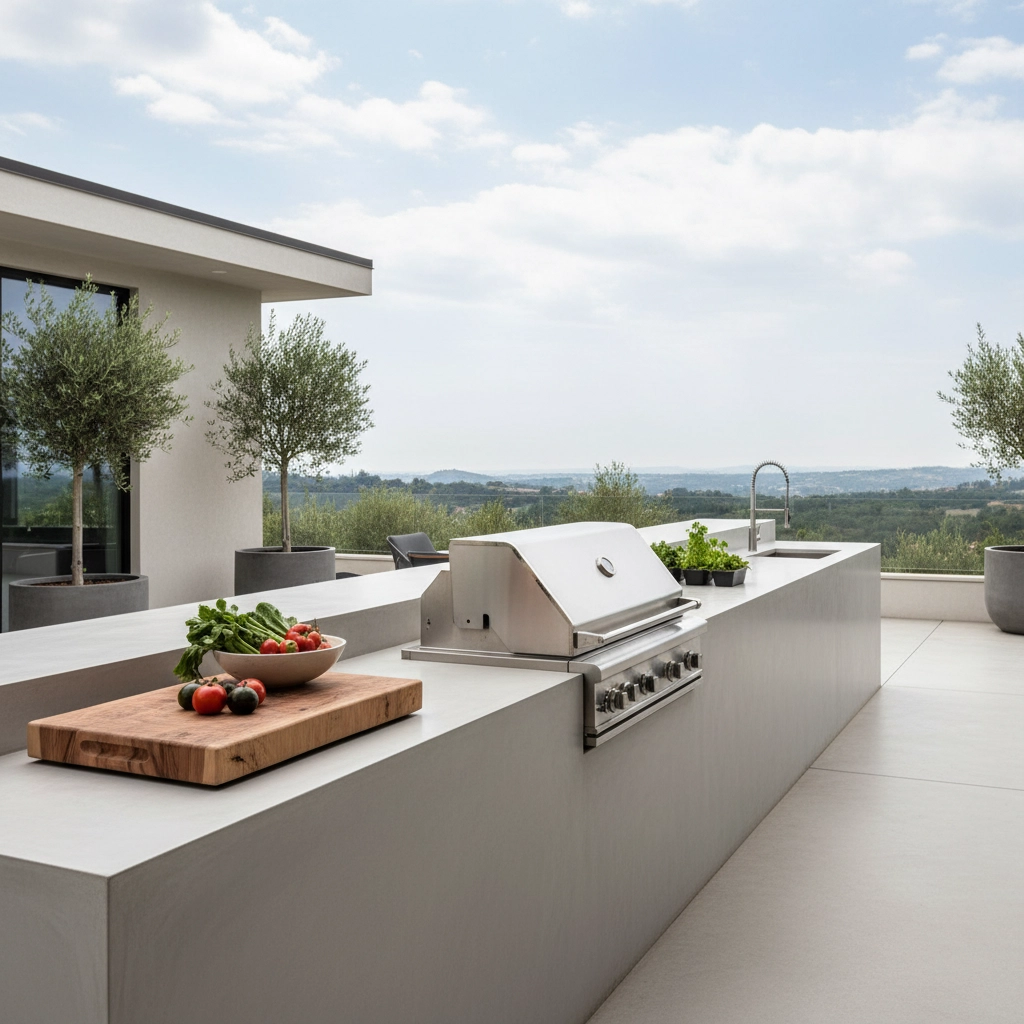
Failing to address weather protection and ventilation creates multiple problems: accelerated wear on appliances and surfaces, uncomfortable cooking conditions during adverse weather, and poor smoke management that affects both cooks and guests. Many homeowners assume that "outdoor" means "completely exposed," missing opportunities to create comfortable, protected cooking environments.
The Fix: Incorporate weather protection that suits your climate and cooking style. Consider installing a pergola, pavilion, or covered structure over key areas of your kitchen. For ventilation, install a proper range hood designed for outdoor use, or position your grill strategically to take advantage of natural airflow patterns. In windy areas, consider installing windscreens or partial enclosures to create a more comfortable cooking environment. These protective elements extend your outdoor kitchen's usable season while protecting your investment from weather damage.
Getting Your Outdoor Kitchen Right
Successful outdoor kitchen design requires balancing functionality, durability, and aesthetics while avoiding these common pitfalls. The key lies in thorough planning that considers your specific climate, cooking habits, and entertainment style. Take time to visualize how you'll actually use the space: from daily family meals to large gatherings: and design accordingly.
Remember that outdoor kitchens represent a significant investment in both money and home value. While it's tempting to cut corners on materials or rush through the planning process, addressing these seven critical areas upfront will result in an outdoor kitchen that provides years of reliable service and enjoyment. Whether you're grilling for two or entertaining twenty, proper planning ensures your outdoor kitchen becomes the entertaining hub you envisioned rather than a source of ongoing frustration.
For complex outdoor kitchen projects requiring professional expertise, consulting with experienced contractors familiar with local building codes and climate considerations can help you avoid these common mistakes while creating a space that truly enhances your outdoor living experience.
Interested in consulting on your project? Rimant Construction’s team can help weigh your options and create a tailored plan( reach out anytime for a conversation about your goals.)
916-690-4324
info@rimantconstruction.com
rimantconstruction.com
Disclaimer, these are opinions, and as always you should consult your local planning authority and a licensed general contractor before you start construction work.


Comments
Post a Comment